
Project details
LOCATION
Municipalities of Dibra, Lezha, Elbasan, Korça, Roskovec and Gjirokastër
CLIENT
UNICEF Albania, in cooperation with USAID
YEAR
September 2023 – January 2024
STATUS
Completed
PROGRAM
Survey, Analysis of school
Infrastructure, preparation of inventory
and GIS database, development of GIS
platform and applications
CREDITS /COLLABORATORS
TERRITORY PLANNING & DESIGN NETWORK
TEAM
Thanos Pagonis, Mirlinda Rusi, Albana
Zotaj, Aleko Lango, Erjon Çobani, Luena Rusi
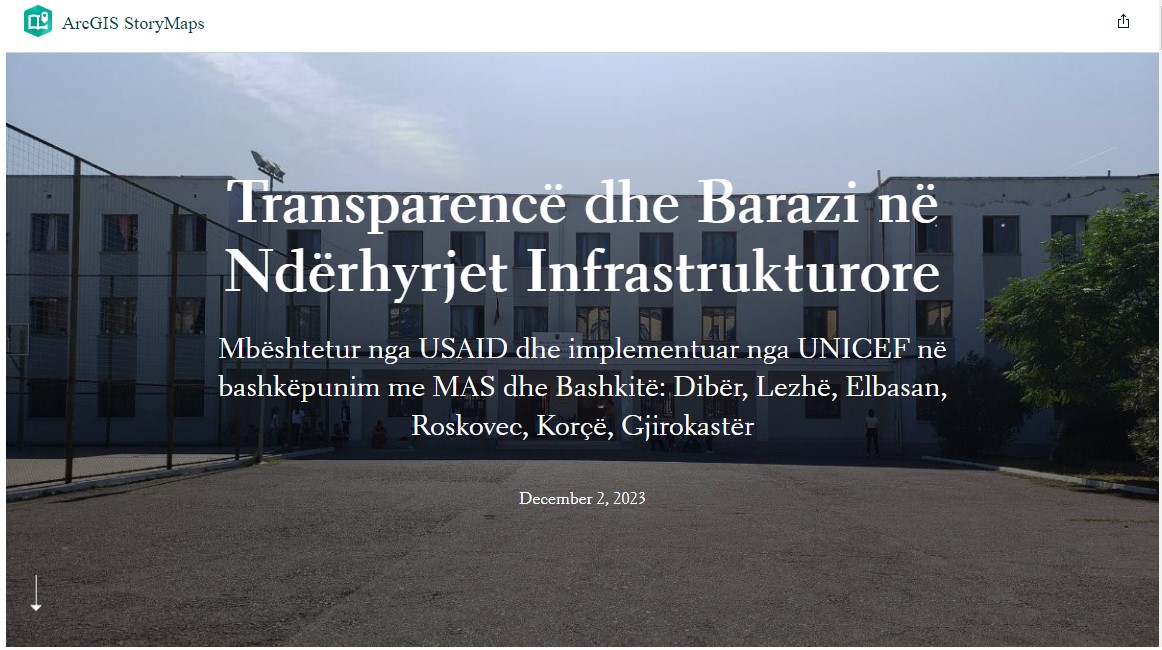
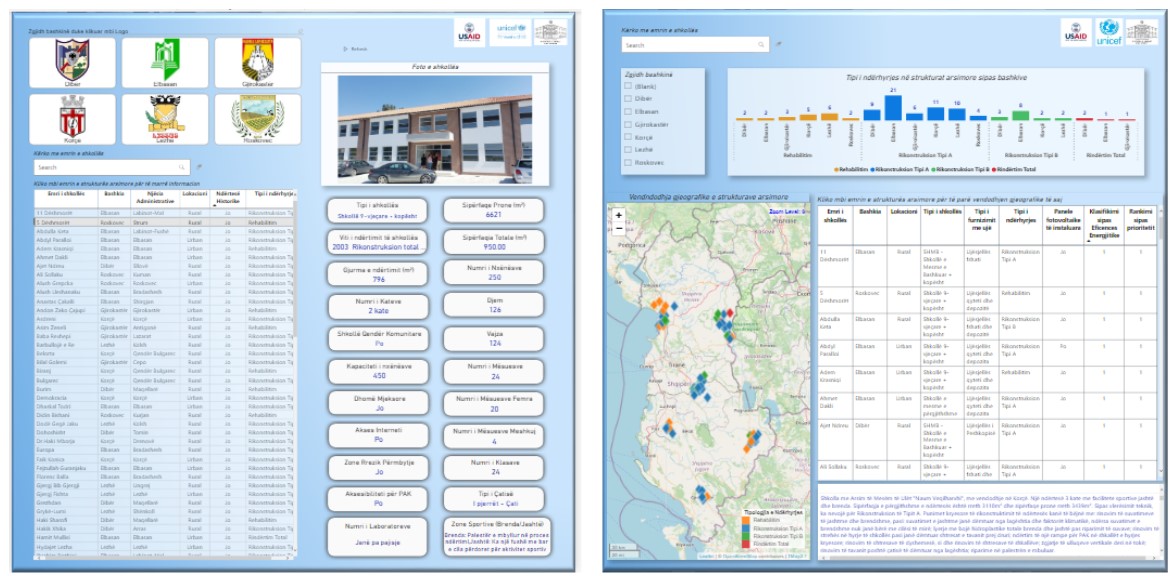
The project was launched in September 2023, supported by USAID and implemented by UNICEF Albania, in cooperation and with the Ministry of Education and Sports, with the aim to help the selected municipalities in the process of evidencing the problems and identifying the needs for reconstruction and/or rehabilitation of the schools’ infrastructure in a transparent way through the use of technology tools, namely an online web-GIS platform.
The project contributed to developing a shared vision between all involved stakeholders for the improvement of schools according to contemporary challenges having a direct effect to the quality of life of children that are the direct beneficiaries of the project and the communities where the schools are located. The development of a GIS platform and applications, contributes in faster and more transparent cooperation between the municipality staff, local directories of education, the ministry of Education and Sports, altogether with other stakeholders and groups of interest.
The approach and methodology used during the implementation of the project involved:
The project contributed to developing a shared vision between all involved stakeholders for the improvement of schools according to contemporary challenges having a direct effect to the quality of life of children that are the direct beneficiaries of the project and the communities where the schools are located. The development of a GIS platform and applications, contributes in faster and more transparent cooperation between the municipality staff, local directories of education, the ministry of Education and Sports, altogether with other stakeholders and groups of interest.
The approach and methodology used during the implementation of the project involved:
- selection of a representative number of schools in each municipality,
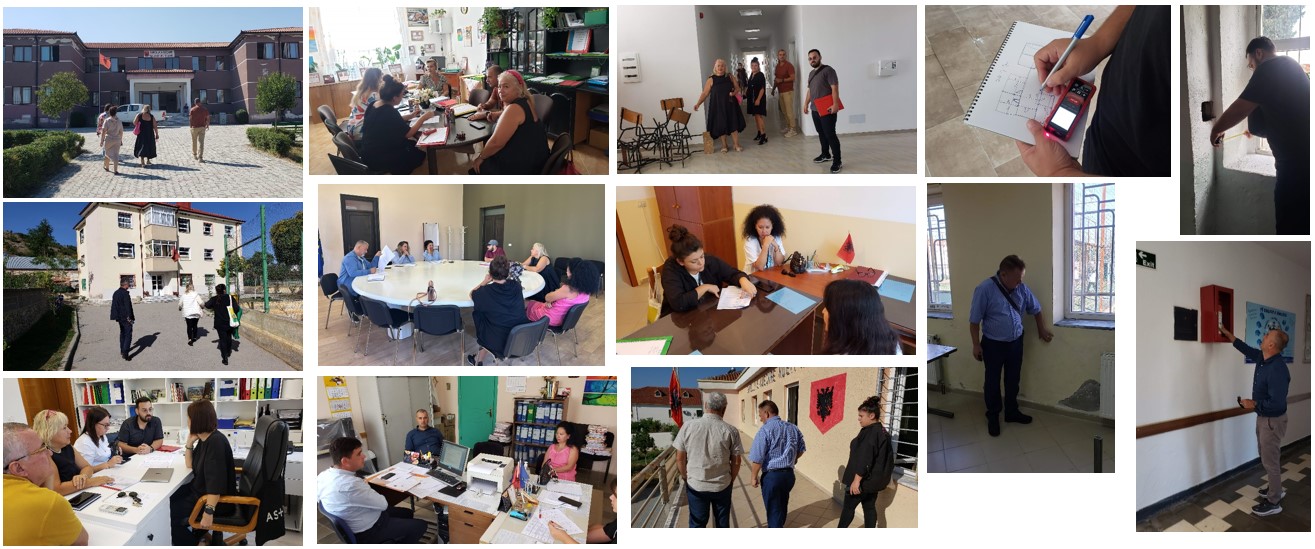
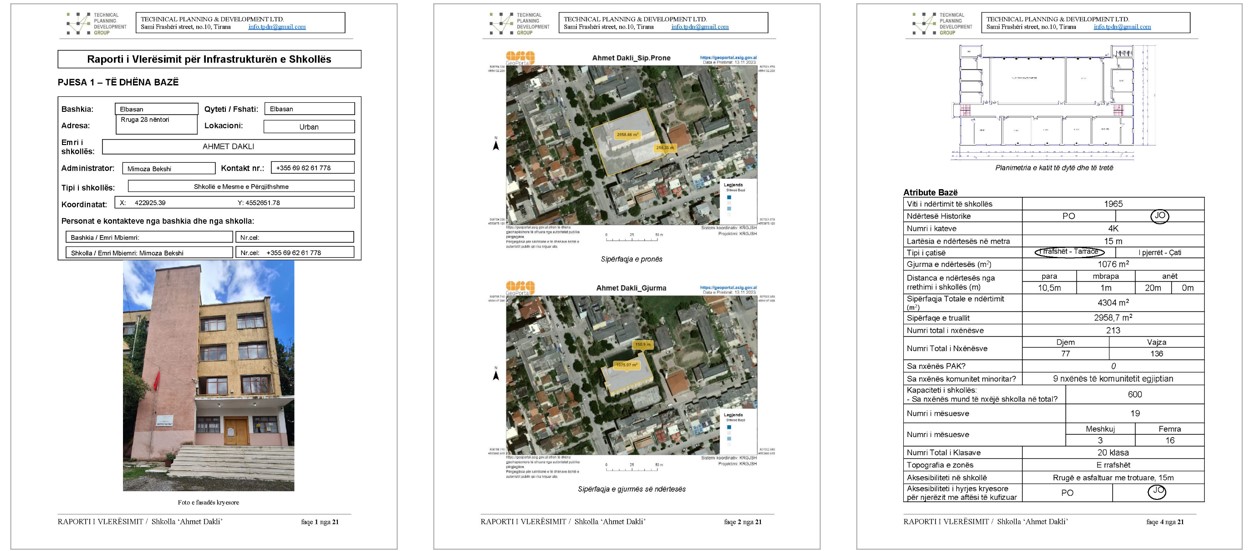
- prepare assessment reports for 100 schools in total based on a comprehensive survey form which included architectural, structural, electrical, utilities, energy efficiency and urbanistic aspects,
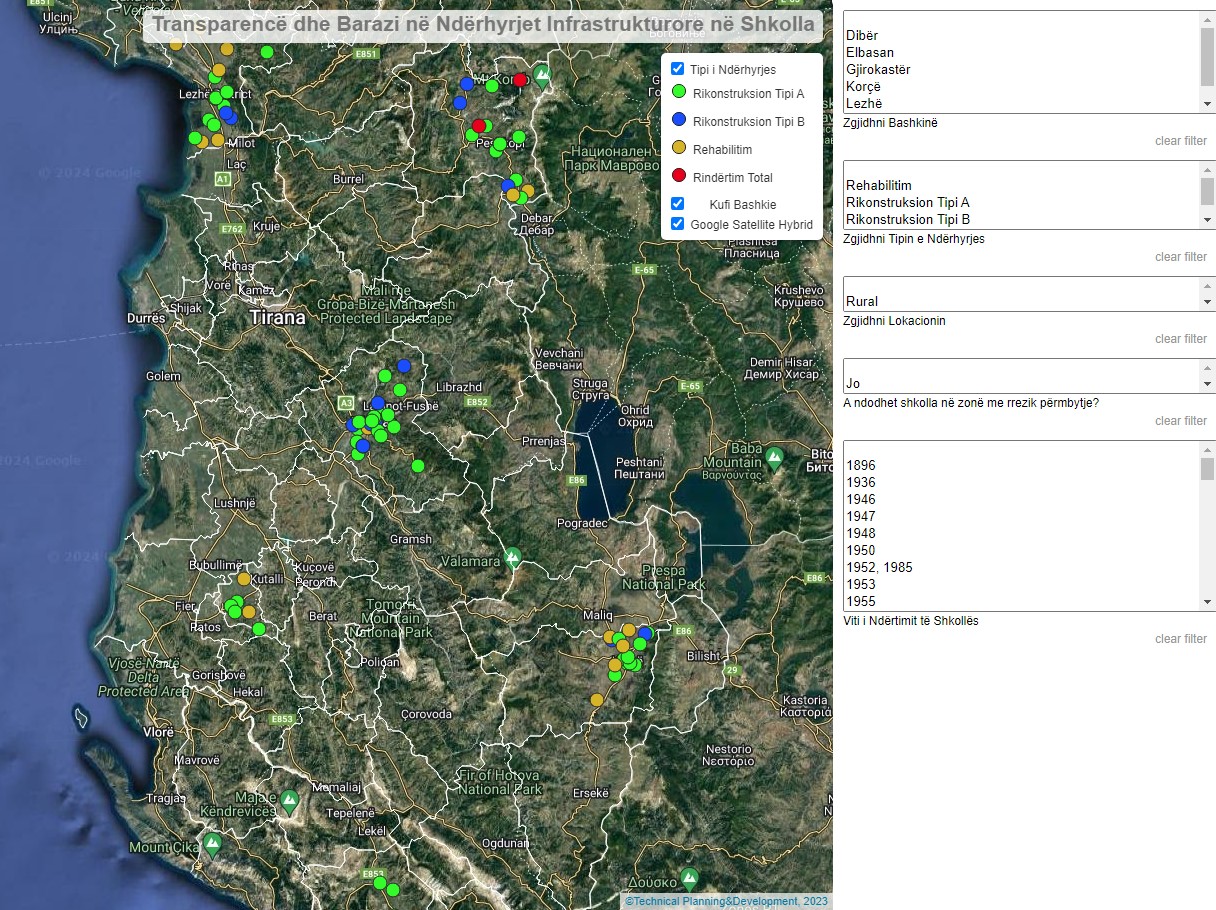
- develop a sustainable online GIS platform (web-based) where all the data collected have been inserted which enables visualizations of data and ranking comparisons within the same municipality and across different municipalities.
Gallery
The proposed plans served the following objectives:
- Development of road and pedestrian network
- Re-qualification of abandoned structures for urban use
- Improve accessibility to cultural and natural heritage monuments
- Development of cultural facilities
- Cleaning and afforestation of the hilly area of the city of Saranda
- Improving services to citizens
- Integration and regulation of informal areas
- Arrangement of public green areas, recreational spaces
- Re-qualification of abandoned structures for urban use
- Improve accessibility to cultural and natural heritage monuments
- Development of cultural facilities
- Cleaning and afforestation of the hilly area of the city of Saranda
- Improving services to citizens
- Integration and regulation of informal areas
- Arrangement of public green areas, recreational spaces